
ACEMAGIC Retro X3
Updated on

The ACEMAGIC Retro X3 is a mini PC that hides current AMD hardware inside a chassis built to look like a 1980s game console, complete with a white perforated top, a grey front panel, and a chunky red power button. It runs the AMD Ryzen 7 H 255, an 8-core, 16-thread Zen 4 processor paired with Radeon 780M integrated graphics, so it has the muscle for everyday productivity, multi-tab web work, and light 1080p gaming. The chassis is small (roughly 5 inches square and 1.7 inches tall) yet the port selection is generous: a 40Gbps USB4 Type-C port, six USB 3.2 Type-A ports, HDMI 2.1, DisplayPort 2.0, and 2.5-gigabit Ethernet. It ships with Windows 11 Pro, 16GB of memory, and a 1TB PCIe 4.0 NVMe SSD. The styling suits a desk where the machine sits on display, and the soldered memory in the US model is the main limit to weigh before buying.
Pros and Cons
| Pros | Cons |
|---|---|
| 8-core, 16-thread Ryzen 7 H 255 (Zen 4) handles productivity and light gaming | US model ships 16GB of soldered LPDDR5, so memory is not user-upgradeable |
| Radeon 780M graphics play many titles at 1080p on lower settings | No NPU, so no Copilot+ local AI acceleration |
| USB4 Type-C port with 40Gbps and DisplayPort output | List price is high for an 8-core, 16GB mini PC |
| Six USB 3.2 Type-A ports plus 2.5GbE, Wi-Fi 6E, and Bluetooth 5.2 | H 255 is 2024-generation Zen 4 silicon, not AMD’s latest |
| Triple-display output via HDMI 2.1, DisplayPort 2.0, and USB4 Type-C | Single Ethernet port, so no second wired link |
| Distinctive retro console design with dual-fan cooling and heat pipes | Coverage so far is launch write-ups, with no benchmark-tested review of this model |
ACEMAGIC Retro X3 Comparison Chart
 ACEMAGIC Retro X3 | |
| Price | List Price: $899.99 Amazon Prices: Loading prices... |
| Version | Ryzen 7 H 255 / 16GB / 1TB |
| Performance Rating | 5.2 |
| Operating System | Windows 11 Pro |
| Processor | Octa-core 3.80 Ghz (max 4.90 Ghz) AMD Ryzen 7 H 255 |
| GPU | Integrated AMD Radeon 780M |
| RAM | 16 GB LPDDR5 (6400MT/s, soldered) |
| Internal Storage | 1 TB NVMe SSD |
| Dimensions width x length x thickness | 5 x 5 x 1.7 inches (127 x 127 x 43.18 mm) |
| Weight | 0.9 lbs (0.41 kg) |
| WiFi | Wi-Fi 6E (802.11ax) |
| Bluetooth | Bluetooth 5.2 |
| Ethernet | 1 Ethernet port at 2.5 Gbps |
| HDMI | 1 Full-Size HDMI Port |
| DisplayPort | 1 DisplayPort (DP 2.0) |
| VGA | No VGA Ports |
| USB Ports | 6 USB 3, 1 USB-C (1 USB4) USB4 Type-C (40Gbps, DP Alt Mode, PD); 6x USB 3.2 Type-A |
| Thunderbolt Ports | No |
| OCuLink | No |
| Internal SATA Ports | No SATA ports |
| Card Reader | No Card Reader |
| Headphone Jack | 3.5mm |
| Fanless | No |
| VESA Mount | Yes |
| In the Box | Mini PC, power adapter, HDMI cable, VESA mount and screws, user manual |
| Expandability | Storage: 2x M.2 2280 PCIe 4.0 to 4TB. RAM: 16GB LPDDR5, soldered (US model). |
Related Mini PCs
-
 ACEMAGIC K1 (Intel Core i5-12600H)The Intel version of ACEMAGIC's K1 pairs the 12-core Core i5-12600H with triple 4K output, seven…
 -
 ACEMAGIC M5 Mini PCThe ACEMAGIC M5 packs the 14-core Intel Core i5-14500HX into a 5-inch square chassis. Triple 4K…
 -
 ASUS NUC 14 ProThe ASUS NUC 14 Pro pairs Intel Core Ultra processors with a toolless chassis, two DDR5 SODIMM…
 -
 GEEKOM A6The GEEKOM A6 pairs an AMD Ryzen 7 6800H with Radeon 680M graphics, USB4, 2.5GbE, and two M.2 slots…
 -
 HP Elite Mini 805 G8HP's 1-liter Elite Mini 805 G8 pairs a 6-core AMD Ryzen 5 PRO 5650G with DDR4 memory, dual M.2…
 -
 HP ProDesk 4 Mini G1iHP's Arrow Lake commercial mini: a 1.09-liter desktop with a 35W Core Ultra 5 235T, a 13 TOPS NPU,…
A Console-Styled Box With Two M.2 Slots and Fixed Memory
The Retro X3 measures about 5.0 x 5.0 x 1.7 inches (128 x 128 x 44 mm) and weighs roughly 0.9 pounds (406 grams), so it takes up very little desk space. A white, dot-matrix perforated top sits above a grey front bezel with a bright red rectangular power button and “Retro Gamer” branding, a clear nod to the home consoles of the 1980s. The front panel carries the USB4 Type-C port, two USB 3.2 Type-A ports, and a 3.5mm audio jack, while the rear holds HDMI 2.1, DisplayPort 2.0, four more USB-A ports, the 2.5GbE jack, and the DC input. ACEMAGIC uses a dual-fan cooling setup with heat pipes to keep the 54W-class processor in check. A VESA mount is included, so the box can hide behind a monitor if you would rather not show off the styling.
At the core is the AMD Ryzen 7 H 255, an 8-core, 16-thread processor built on AMD’s Zen 4 architecture with a base clock of 3.8GHz and boost up to 4.9GHz. It scores around 28,700 on PassMark’s multi-thread CPU benchmark, which puts it in the same class as AMD’s Ryzen 7 8745HS and comfortably ahead of older Ryzen 6000-series and many 12th-generation Intel mobile chips. For 2026, the H 255 is Zen 4 silicon, the generation AMD shipped in 2024, and it carries no NPU, so it cannot run the local AI features that Copilot+ PCs and newer Ryzen AI chips advertise. For traditional CPU work such as spreadsheets, browser-heavy multitasking, code, and light photo or video editing, it has headroom, and the Radeon 780M handles many games at 1080p on lower settings.
The USB4 Type-C port moves data at up to 40Gbps and carries DisplayPort output and power delivery, and together with HDMI 2.1 and DisplayPort 2.0 it lets the Retro X3 drive three displays at once. Six USB 3.2 Type-A ports, 2.5-gigabit Ethernet, Wi-Fi 6E, and Bluetooth 5.2 round out a well-stocked I/O set for a box this size. Storage is expandable: there are two M.2 2280 PCIe 4.0 slots supporting up to 4TB total, and the tool-free top cover makes swapping drives quick. The US model ships with 16GB of soldered LPDDR5-6400, and ACEMAGIC advertises only storage upgrades, so plan your memory needs at purchase. Note that the barebones version ACEMAGIC sells in some other regions instead uses DDR5-5600 SO-DIMM slots with room for up to 128GB, a very different memory setup, so confirm exactly which configuration you are buying.
Reviewer Insights
ACEMAGIC launched the Retro X3 in early 2026, and it has not yet drawn a deep, independent hands-on lab review. The coverage below is launch and first-look reporting, with no original benchmark testing, and there are no video reviews of this model to cite yet.
NotebookCheck
NotebookCheck covered the launch and placed the chip against machines it has already tested, noting it is “the Ryzen 7 H 255 that we have already reviewed inside the GMK NucBox K12 and the Beelink SER9 Pro.” Their write-up confirms the Retro X3 “features 8 CPU cores, 16 threads and a Radeon 780M iGPU but no NPU whatsoever,” and describes the chassis as carrying dual M.2 2280 and SO-DIMM slots within its 128 x 128 x 44 mm housing. NotebookCheck also noted the machine first appeared as a barebones unit priced around $275 in China.
TechRadar
TechRadar wrote up the styling at length, saying “the design intentionally mirrors classic PCs from the 1980s and 1990s, with the gray casing and squared-off silhouette evoking nostalgia for older desktop setups.” The piece framed the Retro X3 as a nostalgia play with modern internals, noting that the vintage styling “does not affect its internals, letting users enjoy the charm of vintage design without compromising current computing standards,” and it highlighted the tool-free upgrade design along with the USB4 and 2.5GbE connectivity.
A Capable Everyday Desktop With a 16GB Ceiling
The Ryzen 7 H 255 and Radeon 780M give it enough performance for office work, heavy multitasking, media, and casual 1080p gaming, and the connectivity (USB4, six USB-A ports, 2.5GbE, Wi-Fi 6E, and triple-display support) is better than the compact size suggests. For someone who wants a distinctive desktop that nods to classic consoles and does not need the latest silicon, it is an appealing pick.
The US model ships with 16GB of soldered LPDDR5, so there is no easy memory upgrade path. The H 255 is also a 2024-era Zen 4 part with no NPU, so it is not the machine for local AI workloads. If the retro design is the draw and 16GB is enough for your workload, the Retro X3 delivers; if you need more memory headroom or the lowest price per spec, Starry Hope’s Mini PC Comparison Chart lines it up against the alternatives.
Upgrades
Accessories that fit the ACEMAGIC Retro X3's USB4 or Thunderbolt ports.
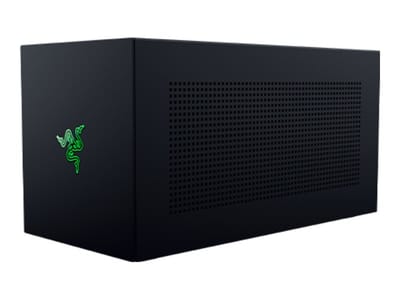
Core X V2
A Thunderbolt 5 enclosure that Razer lists as working with Thunderbolt 4 and USB4 hosts; it fits a four-slot card and needs an ATX power supply.
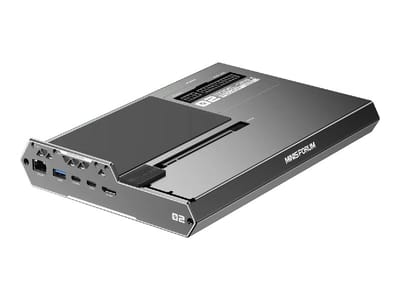
DEG2 eGPU Dock
Connects over USB4 or Thunderbolt 5, with an OCuLink input behind a switch, and adds an M.2 slot; it needs an ATX or SFX power supply.
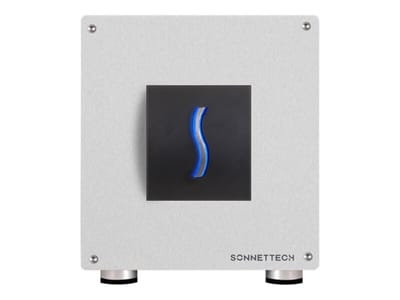
Breakaway Box 850 T5
Has an 850W power supply built in, so only the graphics card is extra, and works with Thunderbolt 4 and USB4 Windows PCs.
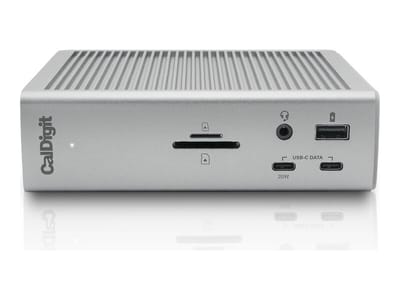
TS4 Thunderbolt 4 Dock
An 18-port dock that CalDigit lists for Thunderbolt 4 and USB4 hosts, with 2.5GbE and a DisplayPort 1.4 output.
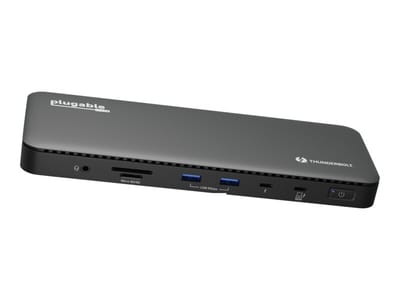
TBT4-UD5 Thunderbolt 4 Dock
Two HDMI ports drive two 4K60 monitors from one Thunderbolt 4 or USB4 port on a Windows PC.
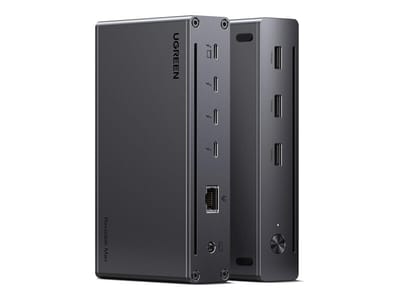
Revodok Max 208 Thunderbolt 4 Dock
Adds three Thunderbolt 4 ports for dual 4K60 displays plus gigabit Ethernet; it has no HDMI port, so monitors connect over USB-C or an adapter.
Frequently Asked Questions
What processor does the ACEMAGIC Retro X3 use?
The Retro X3 uses the AMD Ryzen 7 H 255, an 8-core, 16-thread Zen 4 processor with a base clock of 3.8GHz and boost up to 4.9GHz, paired with Radeon 780M integrated graphics. It scores roughly 28,700 on PassMark’s multi-thread CPU benchmark, placing it in the same performance class as the Ryzen 7 8745HS. It has no NPU, so it does not support Copilot+ local AI features.
Can I upgrade the RAM in the ACEMAGIC Retro X3?
On the US model, no: the 16GB of LPDDR5-6400 is soldered, so pick the configuration that fits your needs at purchase. A barebones version sold in some other regions uses DDR5-5600 SO-DIMM slots that accept up to 128GB, so confirm which one you are buying. Storage stays upgradeable through two M.2 2280 PCIe 4.0 slots supporting up to 4TB.
What ports does the ACEMAGIC Retro X3 have?
The front panel has a USB4 Type-C port (40Gbps with DisplayPort output and power delivery), two USB 3.2 Type-A ports, and a 3.5mm audio jack. The rear adds HDMI 2.1, DisplayPort 2.0, four more USB 3.2 Type-A ports, a 2.5-gigabit Ethernet jack, and the DC power input. Wireless connectivity is Wi-Fi 6E and Bluetooth 5.2.
Can the ACEMAGIC Retro X3 run games?
Yes, within the limits of integrated graphics. The Radeon 780M is a capable iGPU that can run many modern and esports titles at 1080p on low to medium settings, and it supports AMD’s FSR upscaling. It is not a substitute for a discrete graphics card, so demanding AAA games at high settings are out of reach.
How many displays can the ACEMAGIC Retro X3 drive?
The Retro X3 supports triple-display output using its HDMI 2.1 port, DisplayPort 2.0 port, and the USB4 Type-C port, which carries DisplayPort Alt Mode video.
Does the ACEMAGIC Retro X3 come with Windows installed?
Yes. The Retro X3 ships with Windows 11 Pro pre-installed, so it is ready to use out of the box. The Pro edition adds features like BitLocker encryption, Remote Desktop, and Hyper-V virtualization.