
ASUS ROG NUC 16
Updated on

The ASUS ROG NUC 16 is the 2026 flagship of ASUS’s Republic of Gamers mini PC line, and like last year’s ROG NUC 2025 it fits a gaming desktop’s worth of hardware into a box smaller than a games console. The vertical chassis measures 11.1 by 7.5 by 2.2 inches (282 x 190 x 57 mm), a little over three liters, and holds an Intel Core Ultra 9 290HX Plus, a 24-core Arrow Lake-HX Refresh processor, paired with an NVIDIA GeForce RTX 5080 Laptop GPU and a triple-fan cooling system. The configuration on sale bundles 32GB of DDR5 and a 1TB PCIe Gen4 SSD. It is fast for its size, and it costs a good deal more than the machine it replaces while running the same GPU.
Pros and Cons
| Pros | Cons |
|---|---|
| Intel Core Ultra 9 290HX Plus posts a PassMark CPU Mark around 59,400 | ASUS’s own benchmarks put it only about 2.3% ahead of the 2025 model in 3DMark |
| Discrete NVIDIA RTX 5080 Laptop GPU with 16GB GDDR7 in a 3-liter box | That marginal gain arrives at a notably higher price than the ROG NUC 2025 |
| Tool-free thumb screws make RAM and SSD upgrades painless | The mobile RTX 5080 is soldered, so the GPU cannot be upgraded later |
| Dual M.2 slots (one PCIe 5.0, one PCIe 4.0) and up to 128GB DDR5 | A dense three-liter box full of laptop-class silicon still runs warm under load |
| Thunderbolt 4, WiFi 7, dual HDMI 2.1, and dual DisplayPort 2.1 | The bundled 1TB drive is a PCIe 4.0 SSD, not a PCIe 5.0 drive |
| Drives up to five 4K displays; ASUS rates cooling below 38 dBA under load | Bulky 380W external power brick and no VESA mount |
ASUS ROG NUC 16 Comparison Chart
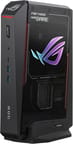 ASUS ROG NUC 16 | |
| Price | List Price: $4,400.00 Amazon Prices: Loading prices... |
| Version | 32GB/1TB/Core Ultra 9 290HX Plus/RTX 5080 |
| Performance Rating | 8.3 |
| Operating System | Windows 11 Home |
| Processor | Twenty-four-core 2.70 Ghz (max 5.50 Ghz) Intel Core Ultra 9 290HX Plus |
| GPU | Dedicated NVIDIA GeForce RTX 5080 Laptop GPU |
| RAM | 32 GB DDR5 SO-DIMM, 2-channel (Up to 128GB DDR5-6400) |
| Internal Storage | 1 TB NVMe PCIe 4.0 |
| Dimensions width x length x thickness | 11.12 x 7.46 x 2.22 inches (282.45 x 189.48 x 56.39 mm) |
| Weight | 6.88 lbs (3.13 kg) |
| WiFi | Wi-Fi 7 (802.11be) |
| Bluetooth | Bluetooth 5.4 |
| Ethernet | 1 Ethernet port at 2.5 Gbps |
| HDMI | 2 Full-Size HDMI Ports |
| DisplayPort | 2 DisplayPorts (2x DP 2.1; up to five 4K displays or 8K gaming) |
| VGA | No VGA Ports |
| USB Ports | 6 USB 3, 2 USB-C Front: 2x USB-A 3.2 Gen 2, 1x USB-C 3.2 Gen 2. Rear: 4x USB-A 3.2 Gen 2, 1x Thunderbolt 4 |
| Thunderbolt Ports | 1 |
| OCuLink | No |
| Internal SATA Ports | No SATA ports |
| Card Reader | No Card Reader |
| Headphone Jack | combo |
| Fanless | No |
| VESA Mount | No |
| In the Box | ROG NUC 16 unit, 380W power adapter, power cord, removable stand, documentation |
| Expandability | Up to 128GB DDR5 (2x CSO-DIMM). 2x M.2 2280: PCIe 5.0 x4 + PCIe 4.0 x4 (up to 8TB). Tool-free thumb screws. |
Related Mini PCs
-
 ASUS ROG GR70The ASUS ROG GR70 packs an AMD Ryzen 9 9955HX3D with 3D V-Cache and an NVIDIA GeForce RTX 5070…
 -
 ASUS ROG NUC 2025The ASUS ROG NUC 2025 squeezes an Intel Core Ultra 9 275HX and an NVIDIA RTX 50-series Laptop GPU…
 -
 BOSGAME VTA-439The BOSGAME VTA-439 pairs AMD's Ryzen AI 9 HX 470 (Gorgon Point) with Radeon 890M graphics in a…
 -
 ACEMAGIC M1A Pro+Cube-shaped Strix Halo mini PC with the AMD Ryzen AI Max+ 395, Radeon 8060S, and 128GB of soldered…
 -
 Beelink SER9The Beelink SER9 runs AMD's 12-core Ryzen AI 9 HX 370 (Strix Point) with Radeon 890M graphics, 32GB…
 -
 MINISFORUM MS-02 UltraThe MINISFORUM MS-02 Ultra is a 4.8-liter box sold with an Intel Core Ultra 9 285HX or 275HX (or a…
A three-liter tower with tool-free RAM and SSD access
The ROG NUC 16 is a vertical tower that stands on an included removable foot and can also lie horizontally to fit a shelf. The Republic of Gamers styling shows in a matte black shell, a smoked side panel over an illuminated ROG logo, angular ventilation, and a red LED accent strip near the top of the front edge. The front face carries the power button, a combo audio jack, two USB-A 3.2 Gen 2 ports, and one USB-C 3.2 Gen 2 port. The rear adds four more USB-A 3.2 Gen 2 ports, a Thunderbolt 4 port with DisplayPort 2.1, two HDMI 2.1 outputs, two DisplayPort 2.1 outputs, and a Realtek 2.5 Gigabit Ethernet jack. Wireless is handled by Intel Killer WiFi 7 and Bluetooth 5.4.
At the center is the Intel Core Ultra 9 290HX Plus, an Arrow Lake-HX Refresh chip with 24 cores (8 performance and 16 efficient), 24 threads, and a 5.5 GHz maximum boost. Its PassMark CPU Mark lands around 59,444, a modest step above the Core Ultra 9 275HX that powered the ROG NUC 2025 (roughly 55,900). Graphics come from an NVIDIA GeForce RTX 5080 Laptop GPU with 16GB of GDDR7, a soldered mobile part, so the GPU is fixed for the life of the machine while the Thunderbolt 4 port leaves room for an external GPU later. ASUS quotes a combined figure of up to 1334 TOPS across the CPU, GPU, and NPU.
Memory runs through two SODIMM slots that accept up to 128GB of DDR5-6400 (including the newer CSO-DIMM modules), and storage uses two M.2 2280 slots, one wired for PCIe 5.0 x4 and one for PCIe 4.0 x4, for up to 8TB of NVMe. Thumb screws open the chassis without tools for both jobs. Cooling is ASUS’s QuietFlow system, with three fans and a dual vapor chamber that the company rates below 38 dBA even under a full workload. Between the dual HDMI 2.1 outputs, dual DisplayPort 2.1 outputs, and Thunderbolt, ASUS rates the system for up to five 4K displays or 8K gaming.
Reviewer Insights
Independent hands-on reviews that benchmark this Core Ultra 9 290HX Plus and RTX 5080 configuration have not been published. The coverage so far is launch analysis built around ASUS’s own numbers, and the size of the generational step is its subject. By ASUS’s own benchmarks the 2026 machine is about 2.3% faster than the ROG NUC 2025 (the NUC 15 generation) in 3DMark Time Spy, running the same RTX 5080 Laptop GPU. Writing for TweakTown, Hassam Nasir summed it up plainly: “The ROG NUC 16 offers a modest performance boost over the NUC 15,” while still calling the machine “ASUS’s fastest NUC and arguably the most console-like in terms of design.”
Reviewing the launch for TheNextWeb, Darius Popa zeroed in on the economics, writing that “The problem is the price relative to the performance gain.” The hardware delivers for a buyer chasing the newest silicon and the most compute per liter, but the price gap over last year’s model matters more than the spec gap. Heat and fan noise follow from packing laptop-class parts into three liters, and ASUS rates the QuietFlow cooling below 38 dBA under load.
The price is the deciding factor against the 2025 model
A Core Ultra 9 290HX Plus paired with an RTX 5080 Laptop GPU reaches into gaming and creator work that most small-form-factor systems cannot touch. The tool-free chassis, dual M.2 storage with a PCIe 5.0 slot, a 128GB memory ceiling, and five-display output cover workstation duty, and Thunderbolt 4 plus WiFi 7 cover the current connection standards.
ASUS’s own figures put this refresh roughly 2.3% ahead of the ROG NUC 2025 on the same GPU, yet it commands a meaningfully higher price, so the upgrade case over the outgoing model is thin. The soldered mobile GPU and the warmth of a dense three-liter design under load count against it too. Buyers who want the newest chip and the most performance per liter, and who value easy RAM and SSD upgrades, will find a lot to like; anyone weighing the price should line it up against the 2025 model and the rest of the field on our Mini PC Comparison Chart.
Upgrades
Accessories that fit the ASUS ROG NUC 16's USB4 or Thunderbolt ports.
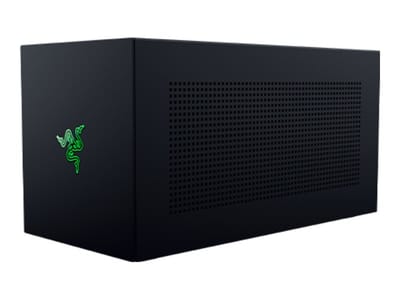
Core X V2
A Thunderbolt 5 enclosure that Razer lists as working with Thunderbolt 4 and USB4 hosts; it fits a four-slot card and needs an ATX power supply.
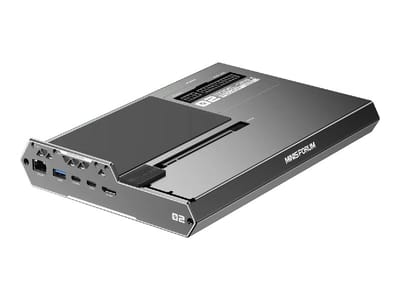
DEG2 eGPU Dock
Connects over USB4 or Thunderbolt 5, with an OCuLink input behind a switch, and adds an M.2 slot; it needs an ATX or SFX power supply.
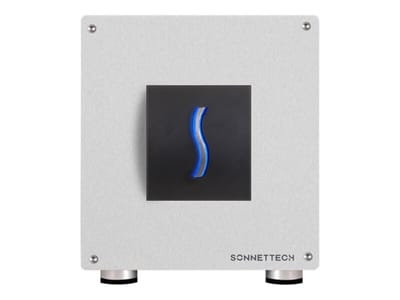
Breakaway Box 850 T5
Has an 850W power supply built in, so only the graphics card is extra, and works with Thunderbolt 4 and USB4 Windows PCs.
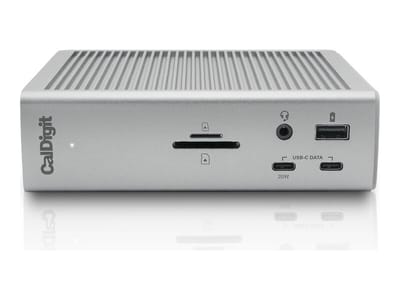
TS4 Thunderbolt 4 Dock
An 18-port dock that CalDigit lists for Thunderbolt 4 and USB4 hosts, with 2.5GbE and a DisplayPort 1.4 output.
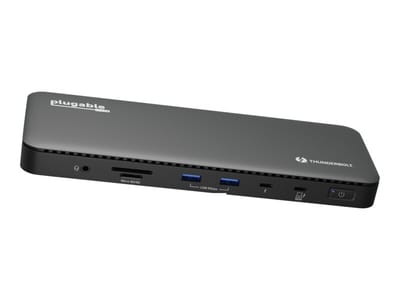
TBT4-UD5 Thunderbolt 4 Dock
Two HDMI ports drive two 4K60 monitors from one Thunderbolt 4 or USB4 port on a Windows PC.
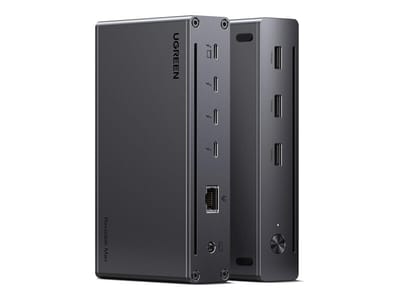
Revodok Max 208 Thunderbolt 4 Dock
Adds three Thunderbolt 4 ports for dual 4K60 displays plus gigabit Ethernet; it has no HDMI port, so monitors connect over USB-C or an adapter.
Frequently Asked Questions
What processor and GPU does the ASUS ROG NUC 16 use?
The ROG NUC 16 uses the Intel Core Ultra 9 290HX Plus, a 24-core Arrow Lake-HX Refresh processor that boosts to 5.5 GHz, paired with an NVIDIA GeForce RTX 5080 Laptop GPU with 16GB of GDDR7. The configuration currently on sale ships with 32GB of DDR5 and a 1TB PCIe Gen4 SSD. ASUS quotes a combined AI figure of up to 1334 TOPS across the CPU, GPU, and NPU.
How is the ROG NUC 16 different from the ASUS ROG NUC 2025?
The ROG NUC 16 is the 2026 refresh of the same three-liter design. It swaps the ROG NUC 2025’s Core Ultra 9 275HX for the newer Core Ultra 9 290HX Plus (Arrow Lake-HX Refresh) while keeping the RTX 5080 Laptop GPU option. By ASUS’s own benchmarks the 2026 model is about 2.3% faster in 3DMark Time Spy, so the practical difference is small and the main change buyers will notice is a higher price.
How much RAM and storage can the ROG NUC 16 hold?
Two SODIMM slots take up to 128GB of DDR5-6400, including CSO-DIMM modules. Two M.2 2280 slots, one wired for PCIe 5.0 x4 and one for PCIe 4.0 x4, hold up to 8TB of NVMe storage. Thumb screws open the chassis, so the memory and the SSDs are both user-upgradeable.
How many displays can the ASUS ROG NUC 16 support?
ASUS rates the ROG NUC 16 for up to five 4K displays, or 8K gaming, at once. It provides two HDMI 2.1 outputs, two DisplayPort 2.1 outputs, and a Thunderbolt 4 port that also carries DisplayPort 2.1, enough for a multi-monitor gaming or creator setup.
Does the ROG NUC 16 run hot or loud?
Fitting a Core Ultra 9 290HX Plus and a discrete RTX 5080 Laptop GPU into a three-liter chassis gives the cooling system a lot of heat to move, so the system will run warm under sustained gaming or rendering loads. ASUS uses a QuietFlow design with three fans and a dual vapor chamber that it rates below 38 dBA even under a full workload, which is quiet for the class rather than silent. Independent noise and thermal testing of this configuration has not been published.