
ASUS Chromebox 3
Updated on

Note: The ASUS Chromebox 3 has been discontinued and is no longer sold new, but Google has set its Chrome OS Auto Update Expiration date to June 2028, so units still in service continue to receive security updates until then. This page remains a reference for existing owners.
The ASUS Chromebox 3 delivered a compact desktop Chrome OS experience when it launched in 2018. Available in configurations ranging from the budget-friendly Celeron 3865U to more capable Core i3 and i5 variants, this small-form-factor desktop appealed to businesses, schools, and home users seeking a simplified computing platform. Its Chrome OS support runs through June 2028, so it still serves existing owners well for basic web browsing and cloud-based workflows.
ASUS Chromebox 3 Comparison Chart
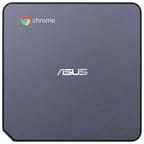 ASUS Chromebox 3 | ASUS Chromebox 3 | ASUS Chromebox 3 | ASUS Chromebox 3 | |
| Price | List Price: $749.99 Amazon Prices: | List Price: $549.99 Amazon Prices: | List Price: $249.99 Amazon Prices: | List Price: $449.99 Amazon Prices: |
| Model number | N020U | N019U | N017U | N018U |
| Performance Rating | 6.0 | 4.8 | 2.6 | 3.4 |
| Chromebook Plus | No | No | No | No |
| Processor | Quad-core 1.80 Ghz (max 4.00 Ghz) Intel Core i7-8550U | Dual-core 2.40 Ghz Intel Core i3-7100U | Dual-core 1.80 Ghz Intel Celeron 3865U | Dual-core 2.40 Ghz Intel Core i3-7100U |
| RAM | 8 GB | 8 GB | 4 GB | 4 GB |
| Internal Storage | 32 GB SSD (upgradable) | 32 GB SSD (upgradable) | 32 GB SSD (upgradable) | 32 GB SSD (upgradable) |
| Screen Size | No Screen | No Screen | No Screen | No Screen |
| Screen Resolution | No Screen | No Screen | No Screen | No Screen |
| Screen Type | No Screen | No Screen | No Screen | No Screen |
| Touch Screen | No | No | No | No |
| Stylus / Pen | No Stylus Support | No Stylus Support | No Stylus Support | No Stylus Support |
| Dimensions width x length x thickness | 5.8 x 5.88 x 1.58 inches (147.32 x 149.35 x 40.13 mm) | 5.8 x 5.88 x 1.58 inches (147.32 x 149.35 x 40.13 mm) | 5.8 x 5.88 x 1.58 inches (147.32 x 149.35 x 40.13 mm) | 5.8 x 5.88 x 1.58 inches (147.32 x 149.35 x 40.13 mm) |
| Weight | 2.2 lbs (1 kg) | 2.2 lbs (1 kg) | 2.2 lbs (1 kg) | 2.2 lbs (1 kg) |
| Backlit Keyboard | No | No | No | No |
| Webcam | No Webcam | No Webcam | No Webcam | No Webcam |
| WiFi | 802.11 b/g/n/ac | 802.11 b/g/n/ac | 802.11 b/g/n/ac | 802.11 b/g/n/ac |
| Bluetooth | Bluetooth 4.2 | Bluetooth 4.2 | Bluetooth 4.2 | Bluetooth 4.2 |
| Ethernet | Yes | Yes | Yes | Yes |
| Cellular Modem | No | No | No | No |
| HDMI | Full-Size HDMI | Full-Size HDMI | Full-Size HDMI | Full-Size HDMI |
| USB Ports | 2 USB 2.0, 3 USB 3, 1 USB-C (with DisplayPort over USB Type-C) | 2 USB 2.0, 3 USB 3, 1 USB-C (with DisplayPort over USB Type-C) | 2 USB 2.0, 3 USB 3, 1 USB-C (with DisplayPort over USB Type-C) | 2 USB 2.0, 3 USB 3, 1 USB-C (with DisplayPort over USB Type-C) |
| Thunderbolt Ports | No | No | No | No |
| Card Reader | microSD / microSD SDXC / microSD SDHC | microSD / microSD SDXC / microSD SDHC | microSD / microSD SDXC / microSD SDHC | microSD / microSD SDXC / microSD SDHC |
| Battery | No Battery | No Battery | No Battery | No Battery |
| Battery Life | 0.0 hours | 0.0 hours | 0.0 hours | 0.0 hours |
| Fanless | No | No | No | No |
| Auto Update Expiration Date | June, 2028 | June, 2028 | June, 2028 | June, 2028 |
Related Chromebooks
-
 ASUS Chromebox 5The ASUS Chromebox 5 delivers modern desktop Chrome OS performance with 12th-gen Intel processors,…
 -
 ASUS Chromebook C203XAThe ASUS Chromebook C203XA shines with military-grade durability, an 11.6-inch anti-glare HD…
 -
 Lenovo Chromebox MicroAn ultra-compact, fanless Chromebox designed for digital signage and specialized deployments,…
 -
 Acer Chromebox CXI5A compact Chrome OS desktop with 12th Gen Intel processors, USB-C with DisplayPort output, and…
 -
 Acer Chromebook 311 (AMD)The Acer Chromebook 311 combines an 11.6-inch ComfyView screen, robust AMD processing, and 10-hour…
 -
 CTL Chromebox CBx3The CTL Chromebox CBx3 brings 13th Gen Intel Raptor Lake processors to Chrome OS desktops,…
Specifications and Performance
The ASUS Chromebox 3 packed reasonable connectivity into a 5.8 x 5.88 x 1.58-inch chassis weighing about 2.2 pounds. The port selection includes three USB 3.1 ports, two USB 2.0 ports, one USB-C port with DisplayPort output, full-size HDMI, Gigabit Ethernet, and a microSD card slot supporting up to 256GB cards. Wi-Fi 802.11ac and Bluetooth 4.2 handle wireless duties. The device supports 4K displays through its video outputs, making it suitable for modern monitor setups.
The base Celeron 3865U configuration came with 4GB of DDR4 RAM and 32GB SSD storage, adequate for Chrome OS but modest by any measure. ASUS offered upgrade paths up to Core i7 processors with 16GB RAM, though reviewers questioned the value proposition of high-end Chrome OS configurations. Tim Danton at The Big Tech Question tested power consumption and found impressive efficiency: the device averaged around 5 watts during typical use, translating to roughly £4.50 annually in electricity costs. “Quiet operation and minuscule electricity costs” made it attractive for always-on applications.
| Pros | Cons |
|---|---|
| Compact form factor with VESA mounting support | Chrome OS support ends June 2028 |
| Extensive port selection including USB-C, HDMI, Ethernet | Android app compatibility was inconsistent |
| Silent operation and minimal power consumption | Celeron model felt sluggish compared to modern devices |
| 4K display support | Limited 32GB base storage |
| Supports up to 256GB microSD expansion | Higher-spec models offered questionable value |
| Device-independent cloud computing | Web-only workflow required browser workarounds |
Reviewer Insights
Trusted Reviews
Chris Barraclough at Trusted Reviews awarded the Chromebox 3 three out of five stars, appreciating its compact size and strong connectivity while noting platform limitations for desktop use. “The device remained cool during use with next to no noise produced,” he observed during testing. However, he encountered frustrating app compatibility issues: “Spotify’s login screen refused to display properly,” requiring a browser workaround. His verdict captured the device’s niche appeal: it delivers a simplified desktop experience but has notable limitations for desk-bound use. He particularly questioned the existence of high-end configurations: “I have no idea why anyone would need a Chromebox 3 with a Core i7 chipset and 16GB of memory, considering the limitations of Chrome OS.”
The Big Tech Question
Tim Danton at The Big Tech Question conducted a thorough one-week test using the Chromebox 3 as his primary system. He praised the cloud-centric workflow, noting that years of Google Drive documents were “instantly accessible” and that if the hardware failed, “Asus could send me a new one the following day and I could pick up from exactly where I was.” At £250 for the base Celeron model, he found excellent value with minimal ongoing costs.
However, significant workflow limitations emerged during extended use. “Laggy is a more fitting description,” he wrote of the Celeron model, “and if you’re used to a Windows PC where Chrome windows launch in an instant, you’ll find the Chromebox 3 irritating at first; even the mouse seems a little sluggish.” He documented Android app issues: Outlook wouldn’t install, and Slack “rejected the device” entirely. File management between cloud services required tedious manual download-and-upload cycles. His conclusion was nuanced: the Chromebox 3 works best as a supplementary device for specific use cases rather than a complete Windows replacement.
Who Was This For?
The ASUS Chromebox 3 found its audience among users who understood Chrome OS’s strengths and limitations. Schools deployed it in computer labs where students needed browser access to educational platforms. Small businesses used it for point-of-sale kiosks, digital signage, and reception desk terminals. Home users appreciated it as a secondary computer for web browsing, email, and streaming media. Some even explored music production on Chrome OS using web-based DAWs, taking advantage of the desktop’s reliable power supply and USB ports for audio interfaces.
The Celeron model made sense for basic tasks: web browsing, Google Workspace applications, and lightweight Android apps. Users with heavier multitasking needs benefited from the Core i3 or i5 configurations, though the price premium pushed into territory where platform limitations became more significant. The VESA mounting capability allowed clean setups behind monitors, and the silent operation suited bedroom or living room installations.
Historical Context
The Chromebox 3 arrived during a transitional period for Chrome OS. Android app support had just arrived on desktop Chrome, but as reviewers documented, compatibility remained inconsistent. Linux container support was emerging but not yet mature. The platform worked best for users who lived primarily in the browser: those who relied on web applications, Google’s productivity suite, and cloud storage.
Google has set the Chromebox 3’s Chrome OS support to run through June 2028, so existing units continue to receive security patches until then; these extended updates focus on security and may reduce Android (Google Play) app support. After June 2028, owners weighing continued use should consider the security implications for sensitive activities like online banking. For offline tasks, media playback, or isolated computing needs, the hardware remains capable despite its discontinued status.
If you are evaluating current options, the Chromebook Comparison Chart lets you sort and filter modern devices by specs and price.