
MINISFORUM MS-S1 MAX
Updated on

The MINISFORUM MS-S1 MAX is a mini workstation built for AI development and professional content creation. It runs AMD’s Ryzen AI Max+ 395 with 16 Zen 5 cores and the Radeon 8060S integrated GPU, in a chassis that sits on a desk or mounts directly into a 2U rack. Its 128GB of LPDDR5x-8000 unified memory lets the CPU, GPU, and NPU share a single high-bandwidth pool, a requirement for running large language models locally. Dual 10GbE networking, USB4 V2 ports at 80Gbps, and a built-in 320W power supply aim it at AI researchers, video professionals, and power users who want that connectivity without external power bricks.
Pros and Cons
| Pros | Cons |
|---|---|
| 128GB unified LPDDR5x-8000 memory enables large AI models | High price positions it as a specialist machine |
| Built-in 320W PSU eliminates external power brick | Fan noise is noticeable under load (up to 48dB) |
| USB4 V2 ports deliver 80Gbps bandwidth | RAM is soldered and cannot be upgraded |
| Dual 10GbE LAN for high-speed networking | PCIe x16 slot is electrically limited to x4 speed |
| AMD Radeon 8060S GPU rivals discrete RTX 4060 performance | Only one HDMI port (no native DisplayPort) |
| Four performance modes for noise/power balance | New 10GbE chips may require manual driver installation |
Related Videos
MINISFORUM MS-S1 MAX Comparison Chart
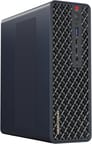 MINISFORUM MS-S1 MAX | |
| Price | List Price: $2,919.00 Amazon Prices: Loading prices... |
| Version | 128GB RAM / 2TB SSD / Ryzen AI Max+ 395 |
| Performance Rating | 8.5 |
| Operating System | Windows 11 Pro |
| Processor | Sixteen-core 3.00 Ghz (max 5.10 Ghz) AMD Ryzen AI Max+ 395 |
| GPU | Integrated AMD Radeon 8060S |
| RAM | 128 GB LPDDR5X (128GB LPDDR5x-8000MT/s unified memory (UMA), soldered.) |
| Internal Storage | 2 TB NVMe SSD |
| Dimensions width x length x thickness | 8.74 x 8.11 x 3.03 inches (222 x 205.99 x 76.96 mm) |
| Weight | 6.2 lbs (2.82 kg) |
| WiFi | Wi-Fi 7 (802.11be) |
| Bluetooth | Bluetooth 5.4 |
| Ethernet | 2 Ethernet ports at 10 Gbps |
| HDMI | 1 Full-Size HDMI Port |
| DisplayPort | DisplayPort available via USB4/USB-C with Alt DP2.0 support. |
| VGA | No VGA Ports |
| USB Ports | 2 USB 2.0, 3 USB 3, 4 USB-C (4 USB4) Front: 2x USB4 (40Gbps) with Alt DP2.0 and 15W PD, 1x USB 3.2 Gen2. Rear: 2x USB4 V2 (80Gbps) with Alt DP2.0 and 15W PD, 2x USB 3.2 Gen2, 2x USB 2.0. |
| Thunderbolt Ports | No |
| OCuLink | No |
| Internal SATA Ports | No SATA ports |
| Card Reader | No Card Reader |
| Headphone Jack | combo |
| Fanless | No |
| VESA Mount | Yes |
| In the Box | Mini PC with built-in 320W PSU, power cable, user manual. |
| Expandability | Full-length PCIe x16 slot (electrically x4) for low-profile expansion cards. Dual M.2 NVMe slots. RAM is soldered and not upgradeable. |
Related Mini PCs
-
 HP Z2 Mini G1aProfessional-grade compact workstation with AMD Ryzen AI Max+ PRO processors and unified memory…
 -
 MINISFORUM UM890 ProCompact yet powerful, the MINISFORUM UM890 Pro boasts AMD Ryzen 9 8945HS, Radeon 780M graphics, and…
 -
 GEEKOM A9 MaxThe GEEKOM A9 Max is a Ryzen AI 9 HX 370 mini PC with Radeon 890M graphics, two DDR5 SO-DIMM slots…
 -
 ACEMAGIC M1A Pro+Cube-shaped Strix Halo mini PC with the AMD Ryzen AI Max+ 395, Radeon 8060S, and 128GB of soldered…
 -
 MINISFORUM MS-02 UltraThe MINISFORUM MS-02 Ultra is a 4.8-liter box sold with an Intel Core Ultra 9 285HX or 275HX (or a…
 -
 GMKtec EVO-T2The GMKtec EVO-T2 is an Intel Panther Lake mini PC announced at CES 2026, rated at 180 TOPS of…
Hardware and Performance

The MS-S1 MAX measures 8.74 x 8.11 x 3.03 inches and weighs approximately 6.2 pounds, larger than a typical mini PC but compact for a workstation. The chassis uses a slide-out design that opens onto the dual M.2 slots and the PCIe expansion area. The front panel carries two USB4 ports at 40Gbps, a USB 3.2 Gen2 Type-A port, a 3.5mm combo audio jack, and dual DMIC microphones with AI noise cancellation. The rear adds two USB4 V2 ports running at 80Gbps, two USB 3.2 Gen2 ports, two USB 2.0 ports, one HDMI 2.1 output supporting up to 8K 60Hz, and dual 10GbE Ethernet ports using Realtek RTL8127 controllers. Cooling comes from a copper base, six heat pipes, dual turbine fans, and phase-change material, enough to sustain 130W continuous operation with peaks up to 160W.
The AMD Ryzen AI Max+ 395 is a 16-core, 32-thread processor built on the Zen 5 architecture with boost clocks reaching 5.1GHz. The integrated Radeon 8060S GPU based on RDNA 3.5 has 40 compute units and performs competitively with discrete cards like the NVIDIA RTX 4060 in many workloads. Combined with the 50 TOPS NPU, the total AI compute capability reaches 126 TOPS, which is 2.2 times that of an RTX 4090 in AI-specific benchmarks according to AMD. Reviewers found the system handles AAA gaming at 1080p with high settings above 60 FPS without a discrete GPU. In Adobe Premiere Pro and Photoshop, the AI-accelerated features process noticeably faster than competing platforms.
Wireless is Wi-Fi 7 with Bluetooth 5.4, alongside the dual 10GbE Ethernet ports. The machine has four USB4 ports in total, two of them on the newer V2 specification at 80Gbps. Two M.2 2280 NVMe slots handle storage on PCIe 4.0, with RAID 0/1 for up to 16TB total capacity. The internal PCIe x16 slot takes low-profile single-slot expansion cards, though it is electrically wired for x4 speeds only. For compute clusters, the machine includes a cascading power connector that allows multiple units to be controlled together; the dual 10GbE ports make it a natural fit for linked Strix Halo inference setups that pool memory across nodes to run 235B-class models.
Reviewer Insights

Patrick Kennedy (ServeTheHome)
Patrick Kennedy from ServeTheHome reviewed the MS-S1 MAX with a focus on its suitability for AI workloads. His testing found this is currently one of the top choices for running large language models locally due to the combination of 128GB memory and optimized performance modes. He noted that “this has become one of our favorite systems… certainly takes my top spot for my favorite AMD Ryzen AI Max Plus 395 system.”
Among the hardware choices, Patrick singled out the internal Lite-On power supply that eliminates the giant power brick common to high-powered mini PCs. Patrick praised the dual 10GbE networking using the new Realtek RTL8127 chips, though he cautioned that these newer chips may require manual driver installation on some operating systems. His thermal testing showed fan noise reaching 42-43 dBA under sustained load, which he characterized as acceptable given the performance levels. He put it this way: “I wouldn’t buy this system just because I wanted really good CPU performance. I would buy this system because I cared about the GPU and I cared about doing AI.” For more on what Strix Halo systems deliver for local AI work, see our practical guide to running LLMs on these machines. If you are figuring out which specific models to load, our Gemma for mini PCs guide maps each variant to hardware tiers and covers what the MS-S1 MAX can handle.
ETA PRIME
ETA PRIME’s hands-on review covered synthetic benchmarks, gaming performance, and power consumption. He emphasized the unique position of the MS-S1 MAX as having “new features built in that we haven’t seen in any other mini PC on the market, like USB 4 V2, so up to 80 gigs instead of 40.” The premium full-metal chassis design impressed him, as did the sophisticated cooling system handling up to 160W boost TDP.
Gaming benchmarks showed the Radeon 8060S delivering playable frame rates without a discrete GPU. The review measured total system power consumption reaching 236W under full load, which is high for a mini PC but reasonable for the performance delivered. ETA PRIME noted that “having that built-in power supply is a plus. That way, we don’t have to worry about that power brick behind the desk.” His primary criticism focused on fan noise in performance mode, where the 95% duty cycle creates audible noise that may bother sensitive users.
RandomGaminginHD
RandomGaminginHD’s gaming-focused review tested numerous AAA titles at various settings. Games like Cyberpunk 2077 and Red Dead Redemption 2 ran above 60 FPS at high settings. He described the experience as “a glimpse at the future of graphics cardless gaming, of integrated gaming solutions.” The Radeon 8060S even handled ray tracing in supported titles like GTA V.
RandomGaminginHD framed the machine as a demonstration of what modern APU technology can do, even if the price puts it out of reach for most gamers. “I did not expect this sort of frame rate from an iGPU. Yeah, over 60 frames per second. Not with low settings either, but with high settings,” he noted. The internal power supply also suits living room setups where cable management matters.
TechRadar
According to TechRadar, the MS-S1 MAX “is really a mini workstation that will fit equally well on a desk or directly into a 2U rack system.” The review awarded 4 out of 5 stars, praising the fast unified memory, dual USB4 v2 ports, and 126 TOPS AI compute capability. However, they noted the high price tag and audible fans under load as significant considerations.
TechRadar found that Adobe Creative Cloud applications particularly benefit from the AI acceleration: “The real difference comes when you start to utilise the AI features in those applications, and even in Premiere Pro, with the CPU and GPU capable of processing Photoshop, Lightroom, and Premiere Pro’s AI-at-heart features quickly.” TechRadar concluded that this is “essentially a specialist machine” targeting professionals who need local AI processing power.
NotebookCheck
NotebookCheck awarded an 84% rating. Their review praised the “sturdy and high-quality aluminum housing” and the practical UEFI options including fan control. They called the connectivity “a real unique selling point, above all the 10G LAN and the large number of USB ports.”
NotebookCheck identified idle noise as the primary weakness preventing a higher score, noting the system is “too loud in idle mode (in performance mode)” without manual BIOS adjustments. They also found high DPC latency values and poor ventilation for PCIe expansion cards as concerns for certain use cases. Nevertheless, they concluded: “If you are looking for maximum performance and future-proofing in the smallest of spaces, the Minisforum MS-S1 Max is not a toy but a true powerhouse.”
Tek Syndicate
Tek Syndicate called the MS-S1 Max a “beast” that blurs the line between mini PC and desktop workstation, singling out local LLM work thanks to 128GB of soldered LPDDR5X-8000 and a strong integrated GPU (up to 126 TOPS). He was impressed by the internal power supply (no external brick) and a serious cooling setup with solid copper and dual fans. He framed it as an AI and workstation machine rather than a general mini PC.
A compact AI workstation for local models and AI video work
For professionals who need substantial local compute without a tower’s footprint, the 128GB of unified memory and 126 TOPS of AI performance fit large language models and AI-assisted video production. The dual 10GbE networking and USB4 V2 connectivity suit demanding workflows.
Anyone who mainly wants a quiet general-purpose PC or a gaming machine should look elsewhere. The fan noise under load and the price reflect its professional positioning. If you need expandable RAM or full PCIe x16 bandwidth for a discrete GPU, a traditional workstation or a larger mini PC platform fits better. Buyers weighing the timing of a purchase can also check our Gorgon Halo wait-or-buy breakdown to understand how AMD’s upcoming Ryzen AI Max 400 series compares to the chip in this machine.
For side-by-side specs, see our Mini PC Comparison Chart.
Frequently Asked Questions
What processor does the MINISFORUM MS-S1 MAX use?
The AMD Ryzen AI Max+ 395, with 16 Zen 5 cores and 32 threads, a base clock of 3.0GHz, and boost up to 5.1GHz. It includes the integrated Radeon 8060S GPU with 40 compute units and a 50 TOPS NPU for AI acceleration, and it scores approximately 55,005 on PassMark’s CPU benchmark, making it one of the most powerful processors available in a mini PC form factor.
Can I upgrade the RAM in the MINISFORUM MS-S1 MAX?
No. The memory is soldered LPDDR5x and cannot be changed after purchase. The system ships with 128GB of LPDDR5x-8000MT/s unified memory (UMA), the maximum configuration. That unified architecture lets the CPU, GPU, and NPU share the same high-bandwidth memory pool, which AI workloads need, but it means the configuration is fixed.
What ports does the MINISFORUM MS-S1 MAX have?
The front panel has 2x USB4 ports (40Gbps), 1x USB 3.2 Gen2, a 3.5mm combo audio jack, and dual microphones. The rear adds 2x USB4 V2 ports (80Gbps), 2x USB 3.2 Gen2, 2x USB 2.0, 1x HDMI 2.1 supporting up to 8K 60Hz, and 2x 10GbE Ethernet ports. All USB4 ports support DisplayPort Alt Mode 2.0 and 15W Power Delivery.
What’s included in the box with the MINISFORUM MS-S1 MAX?
The box holds the mini PC itself, with its built-in 320W power supply, plus a power cable and a user manual. There is no external power brick; the power supply is integrated into the chassis. The system also supports VESA mounting for monitor attachment.
Can I add a discrete graphics card to the MINISFORUM MS-S1 MAX?
Not officially. The internal full-length PCIe x16 slot is electrically wired for x4 speeds only, so it takes low-profile, single-slot expansion cards such as network adapters or storage controllers. MINISFORUM does not support discrete GPUs in this slot, and the limited bandwidth and ventilation may affect performance.
How loud is the MINISFORUM MS-S1 MAX?
Noise depends on which of the four performance modes is active. Quiet Mode idles around 32dB and reaches 41.6dB at full load. Performance Mode idles at 37dB and reaches 48dB at full load. Balanced Mode suits general use, and the UEFI includes fan control options for customization.
What AI tasks can the MINISFORUM MS-S1 MAX handle?
The machine is designed for local AI workloads, with 126 TOPS of total AI compute across the CPU, GPU, and dedicated NPU. The 128GB unified memory allows running large language models with over 128 billion parameters locally. It handles AI features in Adobe Creative Cloud, local LLM inference, machine learning development, and multimodal AI generation.