
GMKtec EVO-X2
Updated on

The GMKtec EVO-X2 puts AMD’s Ryzen AI Max+ 395 into an upright chassis roughly the size of a small tower. Its Radeon 8060S iGPU carries 40 compute units and can pull up to 48GB (64GB builds) or 96GB (128GB build) out of the unified memory pool as VRAM, which is what lets a machine this size run 1440p games and local language models with no discrete card fitted. ETA PRIME put its gaming output on par with an RTX 4060.
Pros and Cons
| Pros | Cons |
|---|---|
| Radeon 8060S iGPU with 40 RDNA 3.5 compute units | Premium price: $2,199.99 list for 64GB/1TB and $3,649.99 for 128GB/2TB |
| Up to 128GB LPDDR5X-8000 unified memory for AI workloads | RAM is soldered and non-upgradeable |
| Excellent 1440p gaming without a dedicated GPU | Fan noise reaches about 50dB in performance mode |
| WiFi 7 and dual USB4 40Gbps connectivity | Upright tower measures 7.6 x 7.3 x 3.03 inches |
| 2.5GbE Ethernet and Bluetooth 5.4 | RGB lighting settings reset on reboot |
| Physical P-Mode button for easy performance switching | Build quality doesn’t fully match the premium price |
Related Videos
GMKtec EVO-X2 Comparison Chart
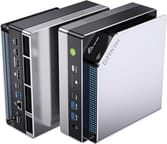 GMKtec EVO-X2 | GMKtec EVO-X2 | GMKtec EVO-X2 | GMKtec EVO-X2 | GMKtec EVO-X2 | |
| Price | List Price: Amazon Prices: Loading prices... | List Price: Amazon Prices: | List Price: Amazon Prices: | List Price: $3,649.99 Amazon Prices: Loading prices... | List Price: $2,199.99 Amazon Prices: Loading prices... |
| Version | 64GB/2TB | 96GB/1TB | 96GB/2TB | 128GB/2TB | 64GB/1TB |
| Performance Rating | 8.1 | 8.1 | 8.1 | 8.1 | 8.1 |
| Operating System | Windows 11 Pro | Windows 11 Pro | Windows 11 Pro | Windows 11 Pro | Windows 11 Pro |
| Processor | Sixteen-core 3.00 Ghz (max 5.10 Ghz) AMD Ryzen AI Max+ 395 | Sixteen-core 3.00 Ghz (max 5.10 Ghz) AMD Ryzen AI Max+ 395 | Sixteen-core 3.00 Ghz (max 5.10 Ghz) AMD Ryzen AI Max+ 395 | Sixteen-core 3.00 Ghz (max 5.10 Ghz) AMD Ryzen AI Max+ 395 | Sixteen-core 3.00 Ghz (max 5.10 Ghz) AMD Ryzen AI Max+ 395 |
| GPU | Integrated AMD Radeon 8060S | Integrated AMD Radeon 8060S | Integrated AMD Radeon 8060S | Integrated AMD Radeon 8060S | Integrated AMD Radeon 8060S |
| RAM | 64 GB | 96 GB | 96 GB | 128 GB | 64 GB |
| Internal Storage | 2 TB | 1 TB | 2 TB | 2 TB | 1 TB |
| Dimensions width x length x thickness | 7.6 x 7.3 x 3.03 inches (193.04 x 185.42 x 76.96 mm) | 7.6 x 7.3 x 3.03 inches (193.04 x 185.42 x 76.96 mm) | 7.6 x 7.3 x 3.03 inches (193.04 x 185.42 x 76.96 mm) | 7.6 x 7.3 x 3.03 inches (193.04 x 185.42 x 76.96 mm) | 7.6 x 7.3 x 3.03 inches (193.04 x 185.42 x 76.96 mm) |
| Weight | 3.6 lbs (1.64 kg) | 3.6 lbs (1.64 kg) | 3.6 lbs (1.64 kg) | 3.6 lbs (1.64 kg) | 3.6 lbs (1.64 kg) |
| WiFi | Wi-Fi 7 (802.11be) | Wi-Fi 7 (802.11be) | Wi-Fi 7 (802.11be) | Wi-Fi 7 (802.11be) | Wi-Fi 7 (802.11be) |
| Bluetooth | Bluetooth 5.4 | Bluetooth 5.4 | Bluetooth 5.4 | Bluetooth 5.4 | Bluetooth 5.4 |
| Ethernet | 1 Ethernet port at 2 Gbps | 1 Ethernet port at 2 Gbps | 1 Ethernet port at 2 Gbps | 1 Ethernet port at 2 Gbps | 1 Ethernet port at 2 Gbps |
| HDMI | 1 HDMI Port | 1 HDMI Port | 1 HDMI Port | 1 HDMI Port | 1 HDMI Port |
| DisplayPort | 1 DisplayPort | 1 DisplayPort | 1 DisplayPort | 1 DisplayPort | 1 DisplayPort |
| VGA | No VGA Ports | No VGA Ports | No VGA Ports | No VGA Ports | No VGA Ports |
| USB Ports | 2 USB 2.0, 3 USB 3, 2 USB-C (2 USB4) | 2 USB 2.0, 3 USB 3, 2 USB-C (2 USB4) | 2 USB 2.0, 3 USB 3, 2 USB-C (2 USB4) | 2 USB 2.0, 3 USB 3, 2 USB-C (2 USB4) | 2 USB 2.0, 3 USB 3, 2 USB-C (2 USB4) |
| Thunderbolt Ports | No | No | No | No | No |
| OCuLink | No | No | No | No | No |
| Internal SATA Ports | No SATA ports | No SATA ports | No SATA ports | No SATA ports | No SATA ports |
| Card Reader | SD | SD | SD | SD | SD |
| Headphone Jack | separate | separate | separate | separate | separate |
| Fanless | No | No | No | No | No |
| VESA Mount | No | No | No | No | No |
| In the Box | GMKtec EVO-X2 Mini PC, 230W power adapter, HDMI cable, user manual | GMKtec EVO-X2 Mini PC, 230W power adapter, HDMI cable, user manual | GMKtec EVO-X2 Mini PC, 230W power adapter, HDMI cable, user manual | GMKtec EVO-X2 Mini PC, 230W power adapter, HDMI cable, user manual | GMKtec EVO-X2 Mini PC, 230W power adapter, HDMI cable, user manual |
| Expandability | 64GB, 96GB, or 128GB LPDDR5X-8000 (soldered, non-upgradeable), dual M.2 2280 PCIe 4.0 NVMe slots with quick-release design (max 16TB total) | 64GB, 96GB, or 128GB LPDDR5X-8000 (soldered, non-upgradeable), dual M.2 2280 PCIe 4.0 NVMe slots with quick-release design (max 16TB total) | 64GB, 96GB, or 128GB LPDDR5X-8000 (soldered, non-upgradeable), dual M.2 2280 PCIe 4.0 NVMe slots with quick-release design (max 16TB total) | 64GB, 96GB, or 128GB LPDDR5X-8000 (soldered, non-upgradeable), dual M.2 2280 PCIe 4.0 NVMe slots with quick-release design (max 16TB total) | 64GB, 96GB, or 128GB LPDDR5X-8000 (soldered, non-upgradeable), dual M.2 2280 PCIe 4.0 NVMe slots with quick-release design (max 16TB total) |
Related Mini PCs
-
 GMKtec EVO-X1 ProThe GMKtec EVO-X1 Pro moves the compact EVO-X1 chassis to AMD's Ryzen AI 9 HX 470, with 64GB of…
 -
 GMKtec EVO-T2The GMKtec EVO-T2 is an Intel Panther Lake mini PC announced at CES 2026, rated by GMKtec at up to…
 -
 BOSGAME M5The BOSGAME M5 puts the 16-core AMD Ryzen AI Max+ 395 and its Radeon 8060S graphics in a metal…
 -
 Mac Studio (2026)Apple's 7.7-inch square pro desktop with memory fixed at purchase. The M5 Max model covers photo,…
 -
 NIMO Mini PC AMD Ryzen AI Max+ 395The NIMO Mini PC packs the flagship AMD Ryzen AI Max+ 395 with 16 Zen 5 cores and Radeon 8060S…
 -
 ACEMAGIC M1A Pro+Cube-shaped Strix Halo mini PC with the AMD Ryzen AI Max+ 395, Radeon 8060S, and 128GB of soldered…
Strix Halo silicon in an upright tower chassis
At 7.6 x 7.3 x 3.03 inches and 3.6 pounds, it claims more desk space than the compact GMKtec EVO-X1. Metal panels and a CNC jet-oxidized black finish carry the look, though Robtech judged the build quality short of what the price suggests. RGB lighting runs along the bottom edge. A 230W power adapter, an HDMI cable, and a manual come in the box.
The Ryzen AI Max+ 395 runs 16 cores and 32 threads with boost clocks up to 5.1GHz, and the chip scored 55,005 on PassMark CPU Mark. The Radeon 8060S beside it has 40 RDNA 3.5 compute units and draws on the LPDDR5X-8000 pool, with up to 48GB addressable as VRAM on the 64GB builds and up to 96GB on the 128GB build. ETA PRIME found the iGPU on par with an RTX 4060 or an AMD Radeon RX 7600 non-XT, which is how the machine games with no discrete card installed.
Two USB4 ports run at 40Gbps for fast peripherals and displays, and HDMI 2.1 plus DisplayPort 1.4 fill out video, with HDMI 2.1 up to 8K and four displays total. Five USB-A ports (three USB 3.0 10Gbps, two USB 2.0) cover older peripherals. WiFi 7 and Bluetooth 5.4 handle wireless, and a single 2.5GbE Ethernet jack handles wired networking. Storage sits in two M.2 2280 PCIe 4.0 NVMe slots with a quick-release design, up to 16TB total.
Reviewer Insights

ETA PRIME’s Perspective
ETA PRIME has been using the EVO-X2 as his favorite mini PC for two months and ranks it at the top of his list. He extensively tested gaming performance and found that “the iGPU here is on par with something like an RTX 4060 or even the Radeon RX 7600 non-XT.” He praised the cooling layout: a dual blower system with a large heatsink for the APU, plus a separate fan to cool the M.2 drives. He praised the up to 128GB of high-speed LPDDR5X RAM as particularly valuable for local AI workloads like video generation and running LLMs, calling it “definitely a mini powerhouse.”
TechDweeb’s Perspective
TechDweeb found it outperformed his Ryzen 9 5950X desktop in Cinebench R23, exclaiming “This thing is just nuts.” He liked the physical performance mode toggle button for switching between quiet, balanced, and performance profiles. His review noted the full-size SD card slot, dual M.2 storage, and the premium feel, while acknowledging “it kind of looks like it ate two or three small mini PCs for breakfast.” He concluded, “If you’re after the absolute best mini PC money can buy, the EVO-X2 is it.”
Robtech’s Perspective
Robtech found it loud and hot under load, saying “it’s not a quiet mini PC at all.” He was critical of the build quality too, observing that “the overall build quality of the mini is okay, but I wouldn’t say it feels up to par with its price tag.” On raw output he called it the “best performing multi-core mobile CPU we’ve ever tested in Cinebench,” and he emphasized the AI capabilities, noting “This mini really excels at AI” with the unified memory pool making it well suited for local LLM work. In his wrap-up he said that “the price is high for the performance on offer and best suits those also planning to use it for AI workloads,” and added “Finally, discrete level gaming performance without the need for a separate GPU chip.”
NotebookCheck’s Analysis
According to NotebookCheck, the EVO-X2 earned an 88% rating and a Top Rated badge as one of the most exciting mini PCs of 2025. Their benchmark suite recorded Geekbench 6 scores of about 2,881 single-core and 16,510 multi-core, with 3DMark Time Spy hitting 11,094. They valued the three performance mode options and noted that “despite its high computing power, the system remains comparatively cool and quiet under full load.” The technical review confirmed stable performance across CPU, GPU, and SSD under sustained loads, though maintenance was flagged as unnecessarily complicated due to the internal design.
ServeTheHome’s Perspective
ServeTheHome concluded that “From an AI perspective, this is a really strong system.” Patrick Kennedy’s enterprise-focused review appreciated the dual USB4 ports and comprehensive I/O but criticized the networking, noting “In a system at this price point, I wish this had 10GbE if not at least 5GbE” instead of its single 2.5GbE port. The review also noted the front and rear 3.5mm headset jacks and the P-mode button for quick performance profile switching.
Tech Guy Beau’s Long-Term Perspective
Tech Guy Beau had the EVO-X2 for two months. His review included a full teardown showing the triple-heatpipe cooling system with dual blower fans, and he replaced the stock paste with PTM phase-change material. He described the EVO-X2 as “technically the most powerful mini PC with an iGPU on the market,” emphasizing that “this tiny little thing is going to give you the same kind of performance as a desktop.” His Cinebench R23 results showed multi-core scores exceeding 36,000. He measured noise levels at 43dB in silent mode rising to 50dB in performance mode. For professional use, he praised the 32GB GPU memory allocation for 4K video editing workflows, and while he called it fairly expensive, he said the roughly US$1,350 to $1,400 he paid was very reasonable for the performance.
Retro Game Corps
Retro Game Corps called the EVO-X2 a generational leap thanks to its AMD Strix Halo silicon: the Radeon 8060S with 40 compute units pushes 1440p gaming that used to require a discrete GPU or eGPU. Backed by a 16-core, 32-thread Zen 5 CPU, he found it outclassing essentially every other integrated-graphics mini PC available.
Customer Reviews
Across 91 ratings on Amazon for the 128GB/2TB build, the GMKtec EVO-X2 averages 4.3 stars. About 70 percent of reviewers gave it five stars, and 13 percent gave it two stars or one. The owners quoted here bought the 64GB or the 128GB build. The recurring draw is running large local AI models on the Ryzen AI Max+ 395, and more than one owner found Linux smoother than the bundled Windows. Yargnad, a verified buyer, wiped Windows after it “just couldn’t go past 64GB when loading models” and reported that Ubuntu “basically worked out of the box.” Mike Harvey, also verified, ran Steam games and wrote that “Everything runs smoothly at maximum settings, and the system runs cool.”
The recurring complaint is software and fan control, not the core hardware. Blake, a verified buyer who rated it four stars, summed it up as “the hardware is fine” while calling the process of finding drivers and updating the BIOS “frankly a nightmare,” and he also flagged fans with “an annoying and pretty audible whine.” Another four-star owner, Mike, called it “a very capable mini PC, but it’s not plug-and-play” for local inference. At the low end, verified buyer mesquiteguy gave it one star after the DisplayPort output “worked for about 5 minutes on my second monitor and then quit.” If you want a turnkey AI box this is not it; if you are comfortable tuning drivers and possibly switching to Linux, most owners rate the hardware highly.
Read more owner reviews on Amazon.
Buy it for local AI work and 1440p gaming in a 3.6-pound box
The Ryzen AI Max+ 395 and Radeon 8060S give this machine graphics output in the range of a mid-range discrete card, and the unified memory architecture can hand up to 48GB (64GB builds) or 96GB (128GB build) of that pool to the GPU. Buyers running local inference or GPU-heavy creative work on one compact machine are the people this hardware is built for. Anyone pushing past a single box will want to read how Sapphire linked two Strix Halo units into a 256GB cluster for 235B-parameter models.
GMKtec lists the 64GB/1TB build at $2,199.99 and the 128GB/2TB build at $3,649.99, well above the 2025 launch prices of about $1,500 to $2,000. Buyers watching the budget, or those who want a discrete GPU for gaming, may do better building a compact desktop or choosing alternatives with dedicated graphics. The soldered RAM locks you into whichever memory configuration you buy, so pick the variant carefully. If you plan to run inference or gaming workloads for hours each day, Starry Hope’s measured running costs for the EVO-X2 break down the wattage at idle and under load. It is also worth reading why Gorgon Halo is largely a Strix Halo rename and whether the next refresh is worth waiting for. Starry Hope’s Mini PC Comparison Chart lists the rest of the category side by side.
Upgrades
Accessories that fit the GMKtec EVO-X2's USB4 or Thunderbolt ports.
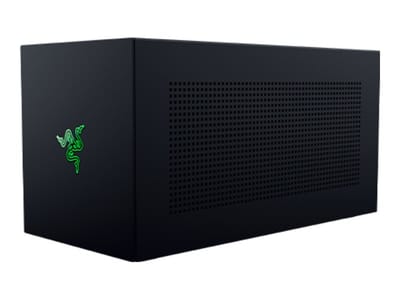
Core X V2
A Thunderbolt 5 enclosure that Razer lists as working with Thunderbolt 4 and USB4 hosts; it fits a four-slot card and needs an ATX power supply.
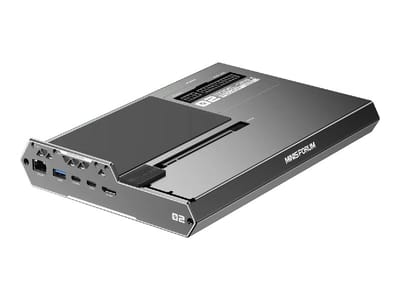
DEG2 eGPU Dock
Connects over USB4 or Thunderbolt 5, with an OCuLink input behind a switch, and adds an M.2 slot; it needs an ATX or SFX power supply.
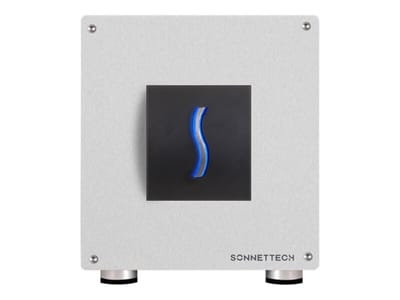
Breakaway Box 850 T5
Has an 850W power supply built in, so only the graphics card is extra, and works with Thunderbolt 4 and USB4 Windows PCs.
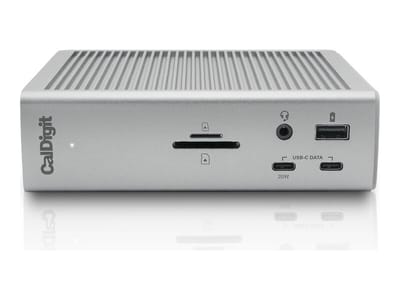
TS4 Thunderbolt 4 Dock
An 18-port dock that CalDigit lists for Thunderbolt 4 and USB4 hosts, with 2.5GbE and a DisplayPort 1.4 output.
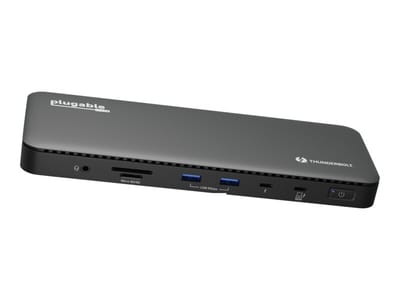
TBT4-UD5 Thunderbolt 4 Dock
Two HDMI ports drive two 4K60 monitors from one Thunderbolt 4 or USB4 port on a Windows PC.
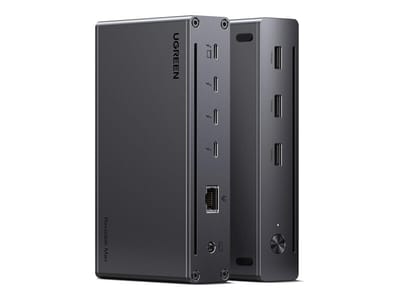
Revodok Max 208 Thunderbolt 4 Dock
Adds three Thunderbolt 4 ports for dual 4K60 displays plus gigabit Ethernet; it has no HDMI port, so monitors connect over USB-C or an adapter.
Frequently Asked Questions
Can I upgrade the RAM on the GMKtec EVO-X2?
No, the RAM on the EVO-X2 is soldered directly to the motherboard and cannot be upgraded after purchase. This design is necessary to achieve the high LPDDR5X-8000 memory speeds that enable the integrated graphics performance. You should choose the RAM configuration (64GB, 96GB, or 128GB) that meets your needs when purchasing.
How does the Radeon 8060S compare to dedicated graphics cards?
The integrated Radeon 8060S carries 40 RDNA 3.5 compute units. ETA PRIME put it on par with an NVIDIA RTX 4060 or an AMD Radeon RX 7600 non-XT, and Retro Game Corps described 1440p gaming in AAA titles that previously needed a discrete GPU.
Is the GMKtec EVO-X2 good for AI and machine learning workloads?
Yes, the EVO-X2 excels at AI workloads thanks to its unified memory architecture. The system can allocate up to 48GB of the LPDDR5X memory as GPU VRAM on the 64GB builds and up to 96GB on the 128GB build, enabling you to run large language models and perform video generation locally. Robtech said the machine excels at AI, pointing to that memory pool as the reason it suits local LLM work.
How many monitors can the EVO-X2 support?
The EVO-X2 drives four displays total, with HDMI 2.1 up to 8K. It features one HDMI 2.1 port, one DisplayPort 1.4 port, and two USB4 ports that can also output video. These ports support complex multi-monitor productivity setups or immersive content creation workflows.
How loud is the GMKtec EVO-X2 under load?
Tech Guy Beau measured about 50dB in performance mode and 43dB in silent mode. The system includes a physical P-Mode button that lets you switch between quiet, balanced, and performance profiles to control the trade-off between noise and thermal performance. At idle or light loads, the fans run quietly, but intensive gaming or rendering will increase noise noticeably.
What storage options does the EVO-X2 offer?
The EVO-X2 features two M.2 2280 PCIe 4.0 NVMe SSD slots with a convenient quick-release design that makes upgrading storage straightforward. Each slot supports drives up to 8TB, allowing for a maximum of 16TB total storage capacity. There are no 2.5-inch SATA bays, so all storage expansion must use M.2 NVMe drives.
Does the EVO-X2 support VESA mounting?
The EVO-X2 is designed to stand upright on a desk and does not include a VESA mounting bracket in the box. The upright tower shape is not set up for behind-monitor mounting. The included package contains the mini PC, a 230W power adapter, an HDMI cable, and user manual.