

Every Chromebook comes with built-in security protection, and you get it from the moment you open the box, with no antivirus to buy or renew. Online fraud against older adults keeps growing: AARP reports that adults 60 and older told the FBI they had $7.7 billion stolen in 2025, about 60 percent more than in 2024. A computer cannot stop every scam, but a Chromebook does remove software installers and antivirus renewals from the list of things to get wrong.
Seniors may be more vulnerable to online scams and phishing due to a lack of familiarity with technology or a tendency to trust others easily online. With their simple interface, built-in security features, and low entry prices, Chromebooks give a senior a safer way to read email, watch videos, and call family. This guide is for adult children shopping for a parent and for seniors shopping for themselves.
Four Chromebooks we recommend for seniors
These four are on sale now, and each has at least 8GB of memory, which is the floor we would buy for anyone. The 4GB models cost less and slow down sooner, a bad trade for someone who will read a slowdown as something they broke.
| Model | Best for | Screen | Weight | Lit keyboard | Google’s update date |
|---|---|---|---|---|---|
| Acer Chromebook Plus 514 | Most seniors | 14-inch anti-glare touch | 3.09 lb | Yes | June 2035 |
| ASUS Chromebook CM15 | Biggest screen for the money | 15.6-inch anti-glare | 3.51 lb | No | June 2036 |
| Lenovo Chromebook Plus 14 OLED | Lightest, longest battery | 14-inch OLED touch | 2.78 lb | Yes | June 2035 |
| Lenovo Chromebook Plus 2-in-1 14 | Reading in a recliner | 14-inch fold-over touch | 3.31 lb | Yes | June 2035 |
Acer Chromebook Plus 514 is our pick for most seniors
The anti-glare touchscreen on the Acer Chromebook Plus 514 lets someone tap what they want instead of working a trackpad, the backlit keyboard helps in the evening, and the 512GB of storage means nobody has to manage files to make room for photos. A full-size HDMI port connects it to a TV or a large monitor with one cable, and there is a USB-C and a USB-A port on each side. In an r/chromeos thread about a Chromebook for an elderly parent, u/SnooShortcuts3006 wrote of the Plus 514 line that it “has worked very well for my parents.”
The weak spot is sound. Blanche, a verified Amazon buyer who gave it four stars, wrote “Can’t say that for the speakers.Very tinny,” so a parent who is hard of hearing should use headphones or a Bluetooth speaker for video calls. The screen is also an indoor panel, and it will look dim on a sunny porch. It needs a daily charge too: MergeDroid got about 6 hours and 15 minutes playing 4K YouTube video at full brightness. The touchpad is small, which is one more reason the touchscreen helps. Look for the 2025 CB514-6H model, because the older boards in this line lack the backlight and their updates end in June 2033.
Acer Chromebook Plus 514
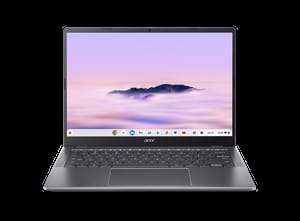
- ✓Anti-glare touchscreen
- ✓backlit keyboard
- ✓512GB of storage
- ✓full-size HDMI
- ✓USB-C and USB-A on both sides
- ✓Google update date of June 2035
- ✗Thin-sounding speakers
- ✗screen too dim for outdoor use
- ✗small touchpad
- ✗plastic body
ASUS Chromebook CM15 has the biggest screen for the money
Aging eyes can make screen size the first priority, and the ASUS Chromebook CM15 gives you 15.6 inches of matte display at the lowest list price of these four. It also has a numeric keypad for anyone who pays bills or keeps a budget by typing numbers, an HDMI port, and the longest update date here. HelenTech’s hands-on, written in Japanese and based on a Japanese-market unit, found the matte screen easy on the eyes over long sessions and got about ten tabs running smoothly on the 8GB model.
It has a 720p webcam, so grandchildren will see a softer picture on video calls than with the other three picks, and the keyboard has no backlight. The keypad pushes the small touchpad left of center, and every port sits on the left edge. It is not a Chromebook Plus, so the chip has less headroom for years of use. Buy the 8GB and 128GB model, and skip the 4GB version sold under the same name.
ASUS Chromebook CM15 (CM1505)
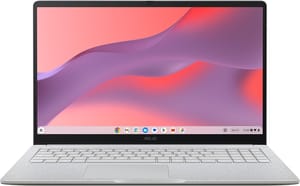
- ✓15.6-inch anti-glare full HD screen
- ✓numeric keypad
- ✓HDMI
- ✓webcam privacy shutter
- ✓Google update date of June 2036
- ✗720p webcam
- ✗no keyboard backlight
- ✗small off-center touchpad
- ✗all ports on the left edge
If the screen matters most and you can spend more, the 16-inch Acer Chromebook Plus 516 has a 1080p webcam and a faster chip. It has no backlight either, and How-To Geek called its speakers “one of the worst sets of laptop speakers I’ve encountered,” with updates that end two years before the Acer 514’s.
Lenovo Chromebook Plus 14 OLED is the lightest, with the longest battery
For someone with arthritis or a habit of leaving the charger in another room, the Lenovo Chromebook Plus 14 OLED is the most comfortable one to live with. It weighs 2.78 pounds, it has no fan to make noise, and a fingerprint reader saves typing a password. Lenovo rates the battery at up to 17 hours, and NotebookCheck measured over 15 hours of web browsing. The OLED screen also has the deepest contrast of these four.
That glossy screen reflects windows and lamps, so it is a poor match for a chair beside a bright window. There is no HDMI port, and the keyboard has shallow travel. Lon Seidman warned that the Netflix app only plays in standard definition, while the netflix.com website plays at full resolution, so bookmark the website. This is also the most expensive of the four, and its price can climb close to where Googlebooks start, so compare both before you buy.
Lenovo Chromebook Plus 14" OLED
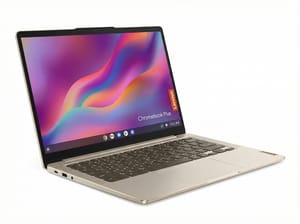
- ✓2.78 pounds
- ✓fanless and silent
- ✓OLED touchscreen
- ✓fingerprint reader
- ✓long battery life
- ✓Google update date of June 2035
- ✗Glossy screen reflects bright rooms
- ✗no HDMI
- ✗shallow keyboard
- ✗highest list price of these picks
Lenovo Chromebook Plus 2-in-1 14 fits reading in a recliner
The hinge on the Lenovo Chromebook Plus 2-in-1 14 folds all the way around, so the keyboard moves out of the way for reading, photos, or a recipe propped up on the kitchen counter in tent mode. The aluminum body has no flex, and the backlit keyboard is spill-resistant. It also has the widest set of ports here: HDMI, two USB-A, two USB-C, and a microSD slot for photos from a camera.
Chrome Unboxed got about 7 hours of real-world battery life and called the audio “the first major letdown,” so expect a nightly charge and use headphones for long calls. At 3.31 pounds it is also a lot to hold up as a tablet for long, so it works better resting on a lap or a table. Check that you are buying the 8GB Plus model, because Lenovo also sells a slower 4GB version in the same body.
Lenovo Chromebook Plus 2-in-1 14
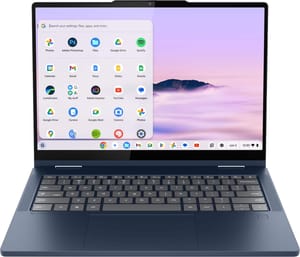
- ✓Folds into tablet and tent modes
- ✓aluminum body
- ✓spill-resistant backlit keyboard
- ✓HDMI
- ✓microSD
- ✓Google update date of June 2035
- ✗About 7 hours of battery in Chrome Unboxed's use
- ✗weak speakers
- ✗300-nit screen suited to indoor use
- ✗heavy to hold as a tablet
What to look for in a Chromebook for a senior
Spec sheets emphasize processors, but the screen and keyboard make more difference to an older reader. A commenter who says he is 84 and has used Chromebooks since they came out put it this way: “I usually recommend Chromebook plus primarily for brighter an better screens. Better touchpad. As well as backlit keyboard.” Chromebook Plus is Google’s certification for faster chips, at least 8GB of memory, and a 1080p webcam, and that webcam matters if video calls are the reason for buying.
Look for a matte or anti-glare screen if the laptop will sit near a window. Think about where it will live, too: a 15.6-inch model is easier to read but less pleasant to carry, while a 14-inch model works better for someone who moves between rooms. A touchscreen helps a parent who is comfortable on a phone and struggles with a trackpad.
Then check the update date, because it decides how long the laptop stays safe to use online. Google counts the years from when the model’s platform launched, not from the day you buy it, so an old model on sale for a low price may have far less time left than a new one. All four picks above have dates in 2035 or 2036. That same commenter would “rather shorten the time it will get updates by a couple of years than lower the specs,” and that is a sensible way to weigh a model with a date a little earlier. For display size, accessibility, and what to do during the first hour, our setup guide for seniors has the steps.
A Googlebook suits few seniors in its first year
Googlebooks reached US stores on October 4. A Googlebook is a premium laptop running Googlebook OS, Google’s new Android-based system, and Google’s launch post says the line starts at $899. Our Googlebook explainer covers the launch models, and the top Dell XPS configuration lists at $1,799.99.
Google says Googlebook OS gets “regular feature drops and updates for up to 10 years,” but it has not published an end date for any model, and the count may start before you buy. The Chromebooks above already list June 2035 or June 2036 on Google’s Auto Update page, about nine years from now. Google also says ChromeOS gets updates “through mid-2034,” and it has promised to help qualifying devices with later dates move to Googlebook OS without yet naming the models. Even if a pick stopped at mid-2034, that would be more than seven years of updates.
A Googlebook makes more sense for a parent who already lives on an Android phone. In an r/chromeos thread from the week pre-orders opened, u/doryeonim described buying an Acer Googlebook for a mother who “basically lives on her phone,” a recent Samsung foldable, and who uses Android apps for work. u/ou812whynot’s answer was that “she should be fine if she’s comfortable with her phone.” Others disagreed: u/DL7610 wrote that “ChromeOS is a known quantity and is dead simple,” and u/puppyyawn wrote that “Chromebook Plus would be better and way less expensive.” The poster later wrote that “most users suggested a chromebook plus” and added, “i guess the only answer i have is that i have some money to spend on my mom?”
We would keep that money unless the parent has a recent Android phone. Googlebook’s phone features need Android 17 or later, so an iPhone household pays for features it mostly cannot use. The software is also new. Adam Doud at SlashGear ran into a stuck on-screen keyboard and a spell when every click became a right-click, and he wrote “I can’t recommend it as a product a consumer should purchase as-is.” Bugs like those end in a phone call to you. The Gemini features add another thing to explain, and u/fead-pell’s advice in that thread is worth passing along whatever laptop you buy: don’t give AI tools your card or bank details.
If you do go that way, the Acer Googlebook 14 folds into a tablet and starts at the bottom of the range. Older accessories will need a hub, since it has only USB-C ports. Google describes Googlebook OS as having on-device malware detection and a ChromeOS-based architecture, but the security record in the next section belongs to ChromeOS, and Googlebook OS is too new to have one.
Chromebook security features protect seniors in several layers
If one protection fails, the others still work, and Google builds them into every model. A Chromebook checks for updates and downloads them whenever it connects to the internet, with no trip through a settings menu. A restart finishes the job, so teach your parent to restart when the update notice appears. This protection lasts until the model’s update date.
When a bad page or file gets through anyway, it lands in a restricted environment called a sandbox, which helps stop it from spreading to other parts of the system. The operating system itself is read-only, which makes it hard for malware to stay on the laptop, and a self-check called Verified Boot looks for system problems and repairs them at every startup. Built-in warnings flag deceptive websites that may try to steal personal details or install malware, and tamper-resistant hardware encrypts the files on the laptop, which keeps them from whoever finds it if it is lost or stolen. ChromeOS also keeps little data on the device in the first place.
Google’s Chromebook page says they have “never had a virus,” with a footnote limiting that to no documented, successful virus attack on ChromeOS as of May 2025. Android Police points out that “Chromebooks aren’t immune to malware”: malicious extensions can log sensitive data, shady Android apps can get into the Play Store, and phishing links can still give hackers access to your data. You can skip the antivirus subscription, but your parent still needs the habits below.
How Chromebooks address seniors’ online challenges
The interface is easy to navigate with limited technology experience, and it has few settings to change by accident. Unlike a traditional Windows computer, it will not run the Windows installers a fake download page might offer.
For vision changes, ChromeOS includes display scaling, a full-screen magnifier, a large mouse cursor, high contrast mode, the ChromeVox screen reader, and Select-to-speak. Dictation helps with sore or stiff hands.
Guest mode lets a grandchild or neighbor use the Chromebook without touching your parent’s accounts or files. You may see “managed guest sessions” recommended for caregivers, but that feature needs a paid Chrome Enterprise or Education Upgrade and an admin console, so it fits care facilities rather than families.
Tips for seniors to stay safe online
Scams target the person rather than the computer, so these habits matter as much as any feature:
- Avoid clicking on links or opening attachments from unknown senders.
- Hang up on surprise tech support. The FTC says real tech companies won’t contact you about a computer problem, real pop-up warnings never ask you to call a phone number, and these scammers often ask for remote access and gift cards. If a pop-up will not go away, restart the Chromebook.
- Skip unfamiliar browser extensions and Android apps. Install only what you need, because these are the main way bad software reaches a Chromebook.
- Create a unique password for each online account, and let Google Password Manager remember them.
- Turn on 2-Step Verification for the Google account, so a stolen password alone will not open it. Set it up with a family member, and keep a backup way to sign in if the phone is lost.
- Restart the Chromebook when it asks, and keep other internet-connected devices up to date.
- Ignore emails or calls that create a sense of urgency or demand immediate action, and call a family member first.
- Set a passcode or fingerprint unlock on your Chromebook, phone, and tablet.
- Be cautious on social media and when sharing personal information online. Check privacy settings, and avoid sharing sensitive details like your full name, address, phone number, social security number, and financial information unless you are sure the website is secure.
- Report suspicious activity. In the US, use ReportFraud.ftc.gov and the FBI’s ic3.gov. The AARP Fraud Watch Helpline (877-908-3360) and the Justice Department’s National Elder Fraud Hotline (833-372-8311) can both talk someone through what to do next on weekdays.
Limitations and drawbacks of Chromebooks for seniors
Many everyday tasks expect an internet connection. Some apps and files work offline, but seniors with unreliable internet may find this limiting. Android and web apps cover most daily needs, but Windows programs that seniors may be accustomed to, such as older tax or photo software, may not run, and a printer or scanner that depends on Windows software needs checking too. Our guide to what Chromebooks can’t do covers the most common limitations and workarounds.
A Chromebook is not automatically easier for everyone. u/They_See_MeTrolling wrote of setting one up for a mother who used only Facebook, Instagram, and email: “It just never clicked for her.” Someone with decades of Windows habits may need patience and a few written notes. That same commenter’s biggest complaint was that he could not remote into her Chromebook the way he can with her PC. Google’s remote access steps name Mac, Windows, and Linux computers, and a one-time code session needs your parent at the keyboard to start it. If you live far away, test how you will help before the laptop leaves your hands.
Cheaper Chromebooks can have as little as 64GB of local storage and rely on cloud storage, which may concern seniors who prefer to store files locally. The Acer 514 pick has 512GB, and the other three have at least 128GB.
Using a Chromebook beyond its update date can pose security risks, as it will no longer receive security updates. Consider replacing the device when it approaches that date, and check before you buy any used or deeply discounted model. Google promises ChromeOS updates through mid-2034, so a later date depends on a move to Googlebook OS. On a Chromebook you own, open Settings, then About ChromeOS, then Additional details. For models you are still considering, our Chromebook Comparison Chart lists the date for free.
Our advice for buying a senior’s Chromebook
Start with the Acer Chromebook Plus 514 unless a specific need points elsewhere. Weak eyes and a tight budget point to the ASUS CM15, while a parent who carries the laptop around the house or dislikes charging it will get more from the Lenovo OLED, and one who reads in a chair may prefer the Lenovo 2-in-1. Spend Googlebook money only on a parent who already lives on a recent Android phone and has someone nearby to help through the early software bugs.
A parent with an iPhone may find an iPad with a keyboard closer to what they already know, and our Chromebook Plus and Android tablet comparison covers the tablet question on the Google side. One who wants a large monitor and a full-size keyboard on a desk can use a simple mini PC setup instead. If you are giving a Chromebook as a holiday gift, set it up before you wrap it, write the helpline numbers above on a note kept beside it, and spend your first visit on email, video calls, and what to do when a scary pop-up appears.


